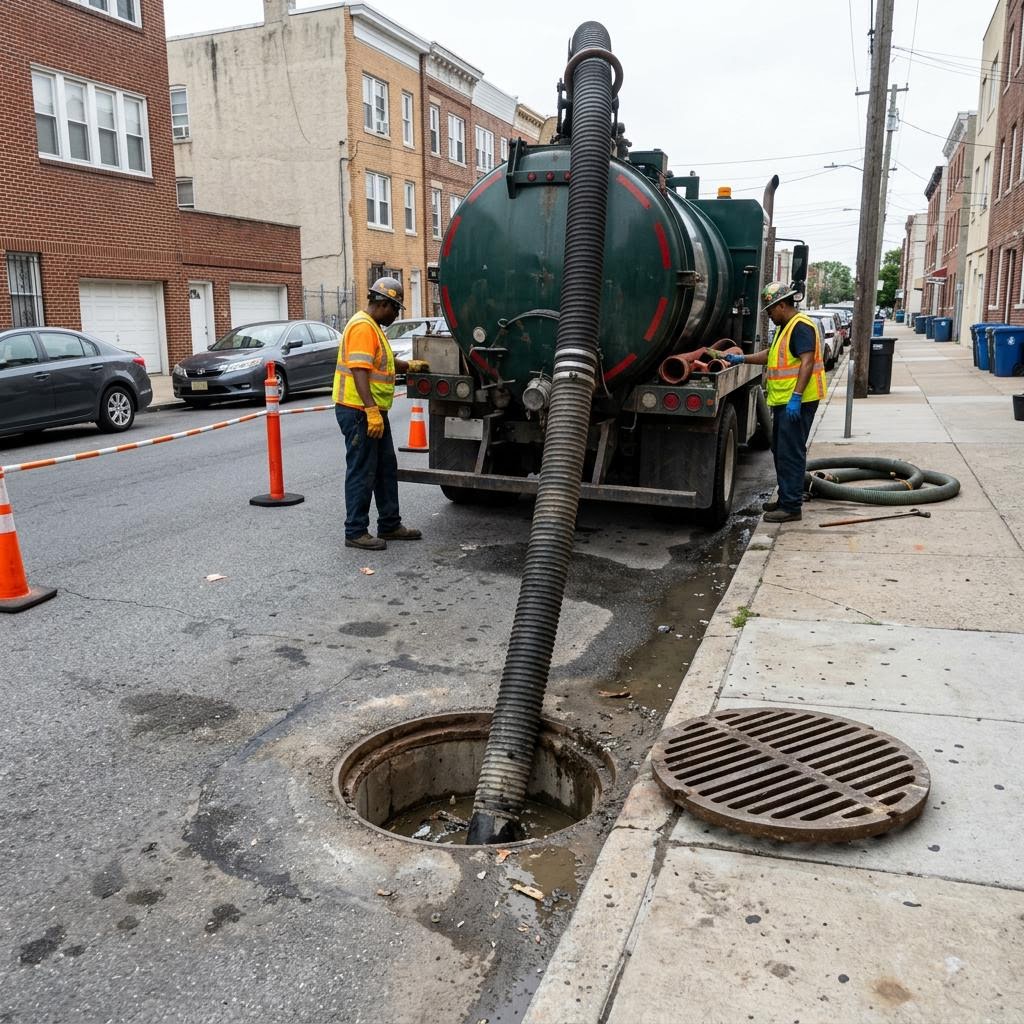
The Problem vs. The Solution
The Problem
Issues related to storm drain cleaning can cause major disruptions if left untreated.
Our Solution
Our expert technicians rapidly diagnose and fix the issue, restoring proper function immediately.
Our Professional Process
Assessment
Thorough evaluation of the problem area.
Execution
Applying targeted solutions with professional equipment.
Verification
Testing to ensure the issue is completely resolved.
How Storm Drains Differ From Your Sewer
Storm drains exist to move rainwater and snowmelt off your property and away from buildings as quickly as possible. Unlike your sanitary sewer, which carries wastewater from sinks and toilets to be treated, storm drainage handles surface water from roofs, driveways, lots, and yards. When it works, you barely notice it exists. When it fails, water has nowhere to go but back toward your foundation, your parking areas, and anywhere else that sits low.
It is worth knowing that parts of older downtown Ottawa are served by combined sewers, where storm and sanitary flows share a single pipe. In those areas, a blocked storm inlet or an overwhelmed system during heavy rain can contribute to surcharging and backups indoors, which is one more reason to keep the storm drainage on your own property flowing freely so you are not adding to the load during a downpour.
What Blocks A Storm Drain
Storm drains clog with the debris that surface water naturally carries into them, and in a city like Ottawa the mix is strongly seasonal. Knowing what tends to accumulate at each time of year helps you understand when cleaning matters most and why a drain that was clear in summer can be blocked by the following spring.
- Autumn leaves and organic matter that mat together over inlet grates
- Sand, salt, and road grit washed in after winter maintenance and the spring melt
- Sediment and silt that settle and build up in the low points of the line
- Ice buildup that blocks inlets during repeated freeze-thaw swings
- Litter, mulch, and yard debris that migrate into the drain during heavy storms
The Real Cost Of A Blocked Storm Drain
When a storm drain cannot keep up with the water reaching it, that water pools where it should not. On a property, that can mean flooded parking areas, saturated landscaping and eroded grades, sheets of ice in winter as pooled water refreezes overnight, and, most seriously, water pushing against foundation walls until it finds a way into a basement. The damage from a single storm can far exceed the cost of years of routine cleaning.
During the spring freshet, the combination of still-frozen ground, rapid snowmelt, and a partly blocked storm system is a recipe for standing water with nowhere to drain. Homes and businesses that keep their storm drains clear going into spring handle the melt far better than those that let a season of leaves and grit accumulate over the winter and only notice the problem when the water arrives.
How Storm Drains Are Cleaned
Clearing a storm drain typically combines mechanical and water-based methods for a complete result. The surface grates and inlets are cleared of leaves and coarse debris first, then the line itself is flushed to move what has settled inside. High-pressure water jetting is particularly effective for storm lines because it lifts and moves the sand, silt, and grit that settle along the bottom of the pipe, and a vacuum truck removes the loosened material rather than simply pushing it further downstream to cause a new blockage.
Where a storm line repeatedly backs up despite cleaning, a camera inspection can locate a collapsed section, a belly holding sediment, or root intrusion that keeps catching debris, so the underlying problem can be fixed at the source instead of the line being cleared over and over at recurring cost.
The right combination of methods depends on what the line is carrying. A drain choked mainly with leaves and coarse debris may need little more than clearing the inlet and a flush, while a line packed with settled sand and silt after a winter of road grit calls for the scouring power of a jet paired with vacuum recovery. Matching the method to the material is what turns a temporary fix into a line that stays clear through the season.
Warning Signs And Seasonal Timing
Storm drains give clear signals when they are struggling to keep up, and the signs below are your cue to have the system cleared before the next big weather event. The best times to clean storm drainage in Ottawa are late fall, after the leaves have finished dropping, and again in spring, after the melt has washed in a full winter of sand and grit.
- Water pooling on pavement or lawn that lingers well after the rain stops
- Slow-draining inlets or grates even during an ordinary shower
- Sediment and debris visible in or around the drain opening
- Recurring ice patches in winter fed by trapped surface water
- Water tracking toward the foundation instead of away from the building
Stay Ahead Of The Weather
Storm drain cleaning is inexpensive insurance compared with the flooding, erosion, and water damage that a blocked line can cause when a storm finally overwhelms it. The scope of the work depends on the length and layout of your drainage, how much debris has accumulated, and whether an inspection is needed to rule out a structural fault behind a recurring problem.
If your property has drainage that has not been serviced before this season, or if you have seen water pooling where it should not, call Ottawa Drain Cleaning at (613) 706-2303 to have your storm drains cleared and inspected.
Keeping Rainwater Where It Belongs
Storm drain performance does not depend only on the pipes underground; it also depends on what reaches them at the surface. A downspout that discharges directly onto a slow-draining area, a grade that slopes toward the building instead of away from it, or a garden bed that sheds mulch into a nearby inlet all put extra strain on the storm system and speed up how quickly it fouls. Managing these upstream contributors reduces how hard your drains have to work in the first place.
For homeowners, a few practical habits go a long way between professional cleanings: keep leaves raked away from grates in the fall, clear snow and ice off inlets so meltwater has somewhere to go during a thaw, and keep an eye on where water actually travels during a heavy rain so you notice a developing problem early. For commercial properties, pairing scheduled storm drain and catch basin service means the surface collection points and the lines that carry water away are maintained as one system, which is the most reliable way to keep rainwater and snowmelt moving away from your building instead of toward it.
Frequently Asked Questions
Ready to schedule storm drain cleaning?
Call now for immediate service or book online for a scheduled appointment.