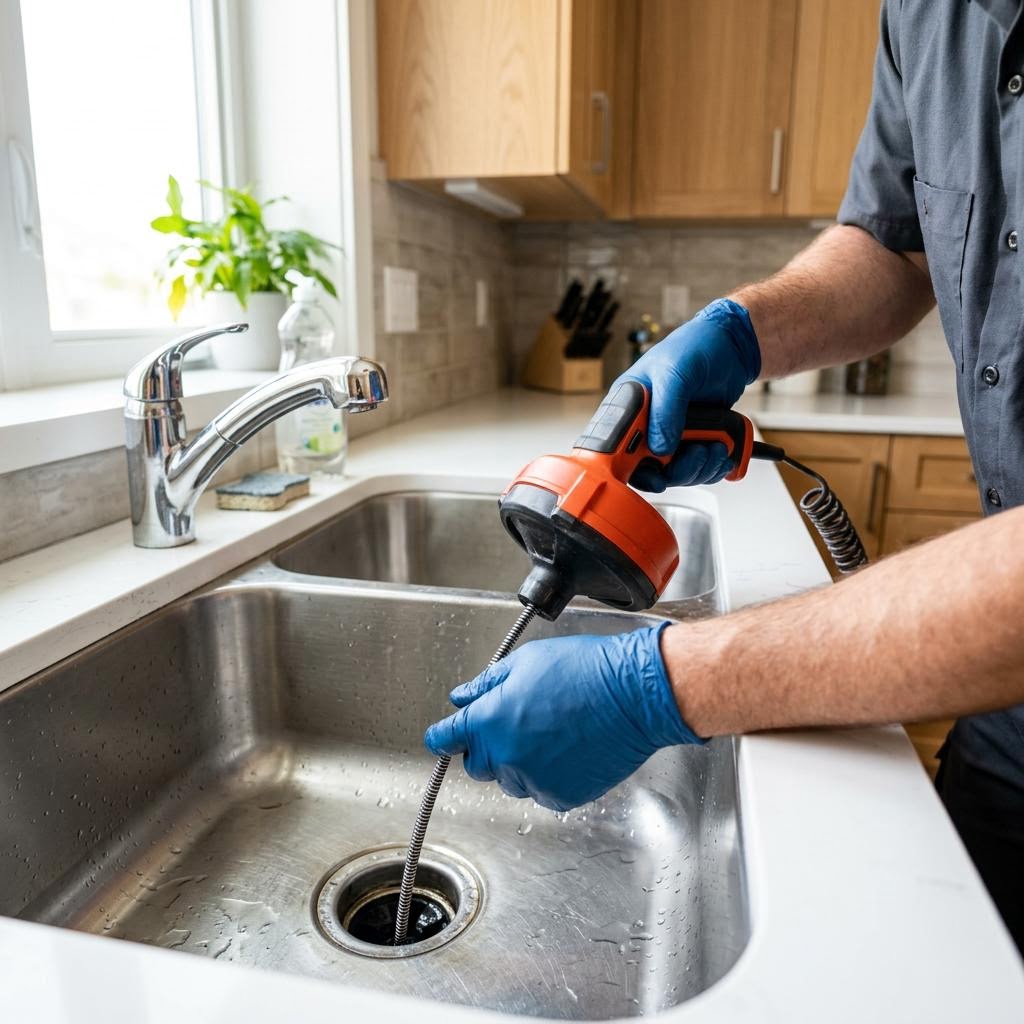
The Problem vs. The Solution
The Problem
Issues related to kitchen drain cleaning can cause major disruptions if left untreated.
Our Solution
Our expert technicians rapidly diagnose and fix the issue, restoring proper function immediately.
Our Professional Process
Assessment
Thorough evaluation of the problem area.
Execution
Applying targeted solutions with professional equipment.
Verification
Testing to ensure the issue is completely resolved.
Why the Kitchen Sink Clogs So Often
The kitchen drain works harder than almost any other line in the house, and it faces a uniquely challenging mix of debris. Every meal sends fats, oils, food particles, and coffee grounds toward a pipe that was never meant to be a waste-processing system. The result is that kitchen lines clog more frequently and more stubbornly than most homeowners expect.
The core issue is grease. Warm cooking fat pours down the drain as a liquid, then cools and solidifies inside the pipe, coating the walls like plaque in an artery. Each subsequent pour adds another layer, and food particles and coffee grounds embed themselves in the sticky film until the passage narrows to a trickle.
The Grease Cycle Explained
Understanding how grease behaves makes prevention obvious. Fat is liquid only while hot; the moment it meets cooler pipe walls it congeals. Ottawa's cold climate intensifies this, because buried and exterior-wall drain sections run cold for much of the year, giving grease even more reason to solidify soon after it leaves the sink.
Hot water and soap while you rinse help push some grease past the trap, but they do not eliminate it; the grease simply travels farther before it hardens, often accumulating in the horizontal branch line where it is harder to reach. This is why kitchen clogs frequently sit deeper in the system than a bathroom hair clog and often resist a simple plunging. It also explains why a kitchen drain can seem fine for a long time and then clog suddenly, as the slowly thickening layer finally closes off the last of the passage.
Habits That Protect the Kitchen Line
Because grease is the root cause, most prevention comes down to keeping fat and solids out of the drain in the first place. A few consistent kitchen habits dramatically reduce clogs.
- Pour cooled cooking grease into a can or jar and put it in the garbage
- Wipe greasy pans with a paper towel before washing them
- Use a sink strainer to catch food scraps and empty it into the compost or bin
- Keep coffee grounds and starchy foods like rice and pasta out of the drain
- Run hot water for a minute after washing dishes to help residue clear the trap
A Note on Garburators and Dishwashers
Kitchen appliances add their own considerations. A garburator grinds food finely, but the resulting slurry still combines with grease to form blockages downstream, so it is not a licence to send everything down the drain. Fibrous scraps, peels, and starchy foods are especially prone to causing trouble even after grinding.
Dishwashers usually share the kitchen drain line, which means a clog can cause water to back up into the dishwasher or, conversely, a dishwasher drain issue can mimic a sink clog. Keeping the shared line clear protects both fixtures, and a slow-draining dishwasher is often an early warning that the kitchen branch is narrowing.
When to Bring in a Professional
Hot water and a plunger can handle a minor kitchen slowdown, but grease that has coated the walls of a branch line generally needs mechanical clearing or hydro jetting to truly remove it. Because snaking alone may only bore through soft grease and leave the walls coated, jetting is often the more lasting solution for a kitchen line that clogs repeatedly.
Watch for the pattern rather than the single event. A kitchen drain that clogs, gets cleared, and slows again within a month or two is telling you the pipe walls are still lined with grease, and that cycle usually only breaks with a thorough scouring. In older homes where the kitchen branch runs in long cold sections toward the main, that buildup can be surprisingly extensive by the time the sink finally backs up.
Cost depends on how far the blockage sits from the sink, whether cabling or jetting is used, and how accessible the line is. If your kitchen sink keeps draining slowly despite your best habits, Ottawa Drain Cleaning can clear the grease at its source and restore full flow at (613) 706-2303.
Reading the Early Signs at the Sink
The kitchen sink gives clear warnings before it fails outright, and heeding them keeps a minor slowdown from becoming a full backup during dinner preparation. Water that lingers in the basin after you finish, a faint sour odour drifting up from the drain, or a gurgle from the sink when the dishwasher empties all point to a line that is narrowing with grease.
- Water pooling briefly around the drain before it clears
- A gurgling sound when the dishwasher or the other side of a double sink drains
- A sour or musty smell rising from the drain opening
- The sink and dishwasher both draining more slowly than they used to
- Water backing up into the second basin when you run the first
The Double Sink and Shared Traps
Kitchen sinks are frequently double basins that share a single trap and branch line, which creates a distinctive symptom worth understanding. When water rises in the second basin as you drain the first, the blockage sits downstream of where the two sides join, not in either basin alone. Plunging only one side while the other is open simply pushes air and water back and forth without moving the clog.
The fix is to seal the overflow and the unused basin so that plunging force is directed down the shared line rather than escaping upward. When that fails, the blockage is likely deep in the branch where grease has accumulated over time, and clearing it means reaching well past the trap. Understanding this shared-trap behaviour prevents a lot of fruitless effort and points you toward the real location of the problem.
Frequently Asked Questions
Ready to schedule kitchen drain cleaning?
Call now for immediate service or book online for a scheduled appointment.