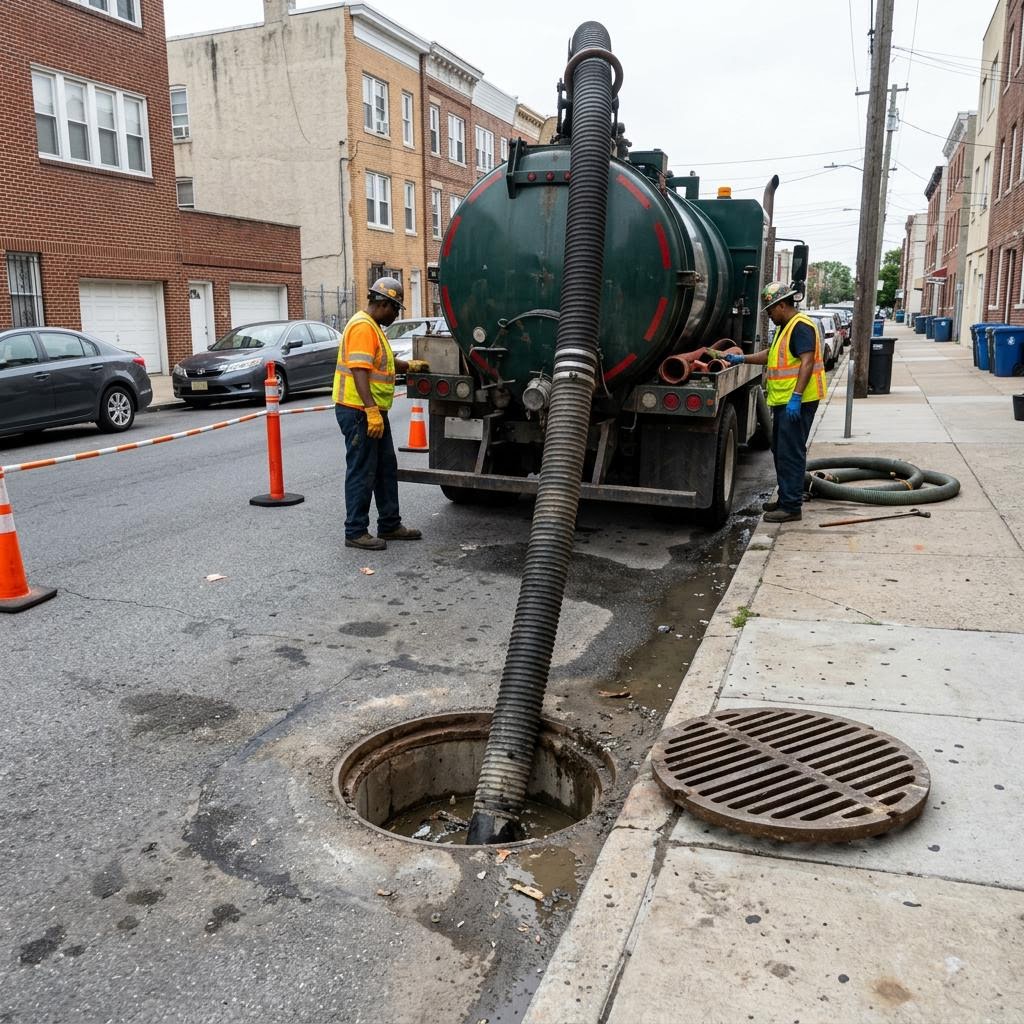
The Problem vs. The Solution
The Problem
Issues related to catch basin cleaning can cause major disruptions if left untreated.
Our Solution
Our expert technicians rapidly diagnose and fix the issue, restoring proper function immediately.
Our Professional Process
Assessment
Thorough evaluation of the problem area.
Execution
Applying targeted solutions with professional equipment.
Verification
Testing to ensure the issue is completely resolved.
What A Catch Basin Does And Why It Matters
A catch basin is the underground box beneath a grated drain in a parking lot, laneway, loading area, or low point on a property. Its job is to collect surface water and, just as importantly, to trap sediment, sand, leaves, and debris in a sump at the bottom before that material can wash into the storm sewer and clog it somewhere downstream where clearing it becomes a much larger problem.
That sump is the entire point of the design, and it is also why catch basins need regular attention rather than being installed and forgotten. Over time the sump fills with grit and organic matter, and once it is full the basin can no longer trap incoming debris. At that point water backs up at the surface, the sediment the basin was meant to hold starts flowing straight into the storm system, and the protection the basin provided is effectively gone.
The Ottawa Factor: Sand, Salt And Snowmelt
Few cities load their catch basins as hard as Ottawa does. Through the long winter, road and lot maintenance spreads large volumes of sand and salt grit to keep surfaces safe, and every plow pass and every thaw pushes that material toward the nearest drain. By the time the spring freshet arrives, catch basins across the city are heavy with a full season of accumulated winter sediment sitting in their sumps.
This is exactly why late-spring cleaning is so valuable here. Clearing the sump after the melt removes that winter grit before the summer rains arrive, restoring the basin's full capacity to handle heavy downpours when it is needed most. Freeze-thaw cycles can also crack or shift older basin walls and the connecting pipes over the years, so a cleaning is a natural moment to inspect the structure for damage while access is open.
How Catch Basin Cleaning Is Done
Cleaning a catch basin properly is not a matter of scooping the grate or reaching in from the top. The sediment, water, and debris that fill the sump are removed with a vacuum truck that lifts the accumulated material out completely, right down to the level of the outlet pipe, so the basin is returned to its full working depth.
With the sump emptied, the outlet and any connecting pipes can be flushed and inspected to confirm that water flows freely toward the storm system. Removing the material properly also matters for compliance, since the collected sediment and any contaminants it holds must be disposed of according to municipal and provincial rules rather than simply washed downstream into the sewer the basin was protecting.
The work is straightforward when a basin is on a schedule, but it becomes considerably harder once a sump has hardened into a compacted layer of sand and silt, which is common after a basin has been ignored for several seasons. Compacted sediment resists the vacuum and can require additional effort to break up before it can be lifted out, which is one more reason a regular interval is both easier and less costly than an eventual heavy clean-out.
Signs A Catch Basin Needs Service
Property managers and homeowners with a private catch basin should watch for the indicators below. Because most of the basin is hidden underground, these surface signs are your main warning that the sump is filling and the basin is losing its ability to do its job.
- Water pooling around the grate long after rain has stopped
- Visible sediment or debris built up nearly level with the outlet pipe
- Foul or stagnant odours rising from the basin
- Sinking, settling, or cracking pavement around the drain
- Standing water or flooding in a lot or laneway during ordinary rainfall
A Maintenance Item, Not An Emergency, If You Plan Ahead
Catch basins reward a scheduled approach rather than a reactive one. A property with heavy vehicle traffic, nearby trees dropping leaves, or a large paved area collecting grit fills its sumps faster and benefits from cleaning at least once a year, most often in spring after the melt has washed in a winter of sand. A quieter site with less debris load may comfortably go longer between services.
The effort involved depends on how many basins you have, how full and how deep the sumps are when serviced, how accessible each one is for a vacuum truck, and how the removed material has to be disposed of. Handling catch basins as routine maintenance is always far cheaper than dealing with the surface flooding, ice hazards, and pavement damage that follow a neglected basin overflowing during a storm.
Protect Your Property Before The Next Storm
A clean, functioning catch basin is quiet insurance against surface flooding, pavement erosion, and clogged storm connections downstream. If your basins have not been serviced since before winter, spring is the ideal time to clear out the season's accumulated sand and grit and to check the structure while the sump is open.
To schedule catch basin cleaning and inspection for your Ottawa property, call Ottawa Drain Cleaning at (613) 706-2303.
What A Full-Property Approach Looks Like
Larger sites rarely have just one catch basin, and the basins on a property work as a connected drainage network rather than as isolated points. A parking lot may have several basins tied into a shared storm line, and if one is neglected it can overload the others or push sediment along the connecting pipes to create a blockage further down. Servicing them together, on a consistent schedule, keeps the whole system balanced and prevents one weak point from undermining the rest.
A thorough approach also looks beyond the sumps themselves. We check that grates sit securely and are not damaged, confirm the connecting pipes are flowing, and note any settling pavement or cracked basin walls that freeze-thaw movement may have caused over the winters. Catching a cracked basin or a partly blocked connecting line during routine cleaning is far cheaper than discovering it when a section of the lot floods during the first big summer storm, and it lets you plan any repair on your own timeline rather than under pressure.
Frequently Asked Questions
Ready to schedule catch basin cleaning?
Call now for immediate service or book online for a scheduled appointment.