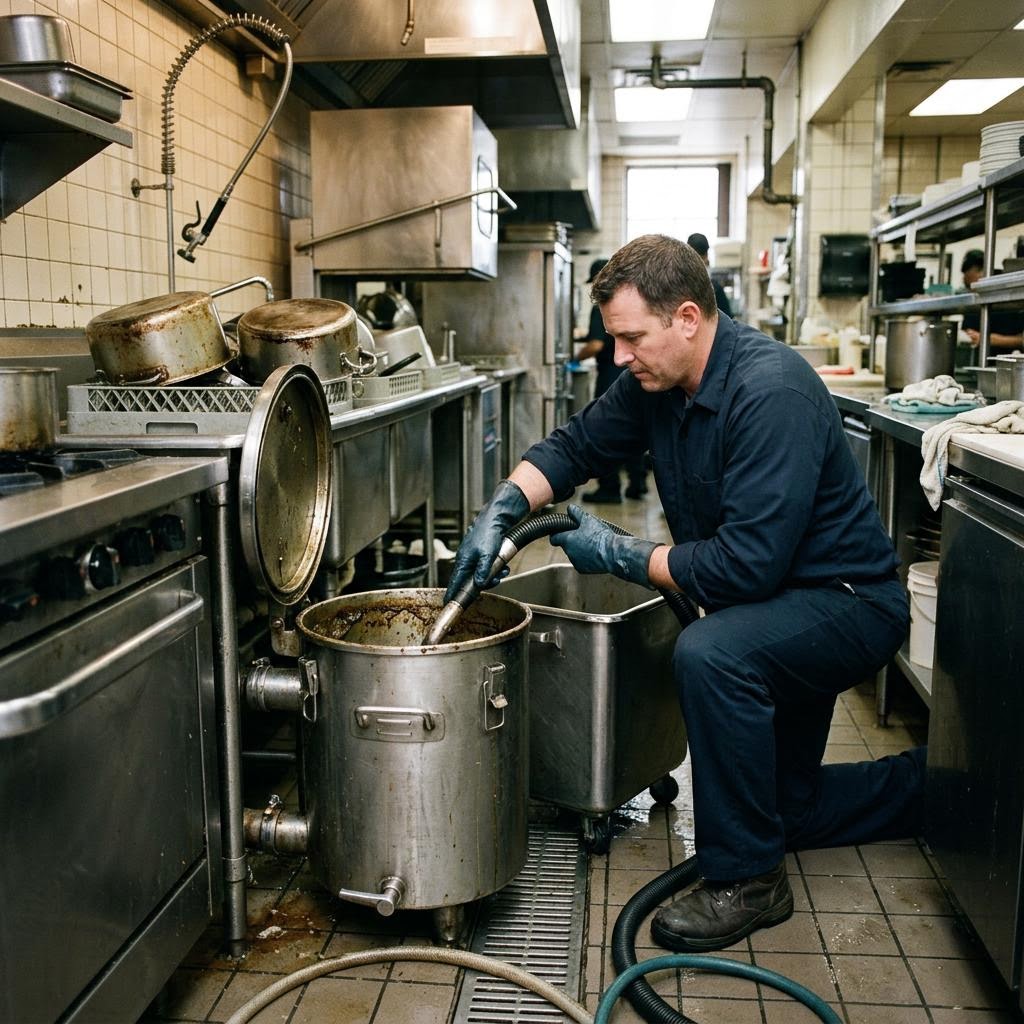
The Problem vs. The Solution
The Problem
Commercial drain failures lead to downtime, lost revenue, and potential health code violations.
Our Solution
We provide powerful, commercial-grade solutions including regular maintenance programs to prevent emergencies before they happen.
Our Professional Process
System Evaluation
We assess your facility's unique plumbing layout and usage demands.
Targeted Cleaning
Using commercial-scale hydro jetters and heavy-duty cabling, we clear the most stubborn commercial blockages.
Maintenance Planning
We develop a custom preventative maintenance schedule tailored to your business.
Commercial Systems Face Harder Demands
A busy restaurant, a multi-unit residential building, and a corporate office each place strain on their drains that no single-family home ever experiences. High-volume fixtures run for hours, kitchen lines carry constant grease loads, and shared stacks in apartment buildings concentrate the waste of dozens of units into a few main lines. A residential clog is an inconvenience; a commercial clog can halt an entire operation.
That intensity changes both the equipment and the strategy required. Commercial cabling and jetting units are larger and more powerful, and the work is scheduled around business operations to minimize disruption. In Ottawa's older commercial corridors, many buildings still run on legacy cast-iron drainage that compounds the challenge with corrosion and rough interior walls. A residential snake simply does not have the reach or torque to clear a large-diameter commercial line packed with hardened grease, which is why the right tools are as important as the right timing.
The stakes are higher in another sense as well. A backup in a licensed kitchen or a healthcare setting is not just a mess but a potential health and compliance issue, and downtime translates directly into lost revenue and unhappy customers or tenants. That is why commercial drain work is judged as much on reliability, scheduling, and documentation as on the cleaning itself. A provider who can work overnight, keep clear service records, and respond fast when something goes wrong is worth far more to a business than one who simply shows up with a snake.
The Grease Trap Problem
For any facility that prepares food, the grease trap is the single most important piece of the drainage system and the most common source of trouble. Fats, oils, and grease that escape the trap or overwhelm it congeal in the lines downstream, where they harden into stubborn blockages that shut down kitchens at the worst possible moments.
Ottawa's sewer-use bylaws set expectations for what commercial kitchens may discharge, and a poorly maintained trap risks both blockages and compliance problems. Regular cleaning of the trap paired with periodic jetting of the kitchen lines keeps grease from ever reaching the point of failure, protecting both operations and standing with the municipality.
The trap is only as good as the discipline around it. Even a properly sized trap will be overwhelmed if kitchen staff routinely pour hot grease down floor sinks or if the trap is cleaned too infrequently for the volume of cooking. Pairing physical maintenance with simple kitchen practices, such as scraping and dry-wiping pans before washing, dramatically reduces the load reaching the trap and the lines beyond it.
Where Commercial Blockages Concentrate
Knowing the trouble spots in a commercial building helps managers target maintenance where it matters most rather than treating every drain equally.
- Kitchen lines and grease traps in food-service operations
- Floor drains in kitchens, washrooms, and mechanical rooms
- Shared waste stacks in multi-storey residential and mixed-use buildings
- Mop sinks and janitorial drains that collect debris and sediment
- Roof and area drains that handle stormwater and snowmelt
The Case for a Maintenance Program
Reactive service is expensive in ways that go beyond the invoice. A blocked kitchen line during dinner service means lost revenue, a backed-up washroom in a retail space drives away customers, and an apartment stack failure affects many tenants at once. Each of these carries costs that dwarf the price of prevention.
A scheduled maintenance program flips the equation. By cleaning high-risk lines on a predictable interval, buildings avoid the emergencies that cause downtime and reputational harm. The right frequency depends on the type of business, the age and material of the drains, and the volume of use, which is why programs are tailored rather than standardized.
There is a documentation benefit as well. A maintenance program produces a record of when lines were serviced and what condition they were in, which supports both bylaw compliance for food-service operations and clear communication with property owners and tenants. When something does eventually need repair, that history helps distinguish normal wear from a developing problem and makes budgeting predictable rather than reactive.
Choosing a Commercial Partner
Commercial work rewards a provider who understands scheduling, documentation, and the realities of running a business. Being able to service lines after hours, keep records that support bylaw compliance, and respond quickly when something does go wrong are as important as the cleaning itself.
Cost for commercial drain cleaning reflects the scale of the system, the equipment required, and whether service is one-time or part of an ongoing program. To set up cleaning or a maintenance schedule tailored to your facility, Ottawa Drain Cleaning works with businesses across the region at (613) 706-2303.
Common Facility Types and Their Challenges
Different commercial buildings fail in characteristic ways, and recognizing your own profile helps focus attention where it counts. Food-service operations live and die by their grease management, since a single overloaded trap can shut a kitchen down at peak service. Multi-unit residential buildings contend with shared stacks where the habits of many tenants combine, so a single household flushing wipes can affect an entire riser.
Office and retail spaces generally see lighter loads but are vulnerable in their own way, because washroom and floor drains may sit unused for long stretches, letting traps dry out and odours rise. Warehouses and mechanical rooms rely on floor drains that collect grit and sediment, which settle and compact if the lines are never flushed. Each of these patterns calls for a different maintenance emphasis rather than a uniform approach.
Older commercial buildings in Ottawa's central corridors carry an extra layer of complexity, since many still run on aging cast iron and some connect to older combined sewers. Understanding both the fixtures inside and the infrastructure they drain into is essential to keeping these buildings running without surprise stoppages.
Frequently Asked Questions
Ready to schedule commercial drain cleaning?
Call now for immediate service or book online for a scheduled appointment.