The Problem vs. The Solution
The Problem
Tree root intrusion and old cast-iron pipe degradation frequently cause main sewer lines to fail, leading to backups in lower-level drains and toilets.
Our Solution
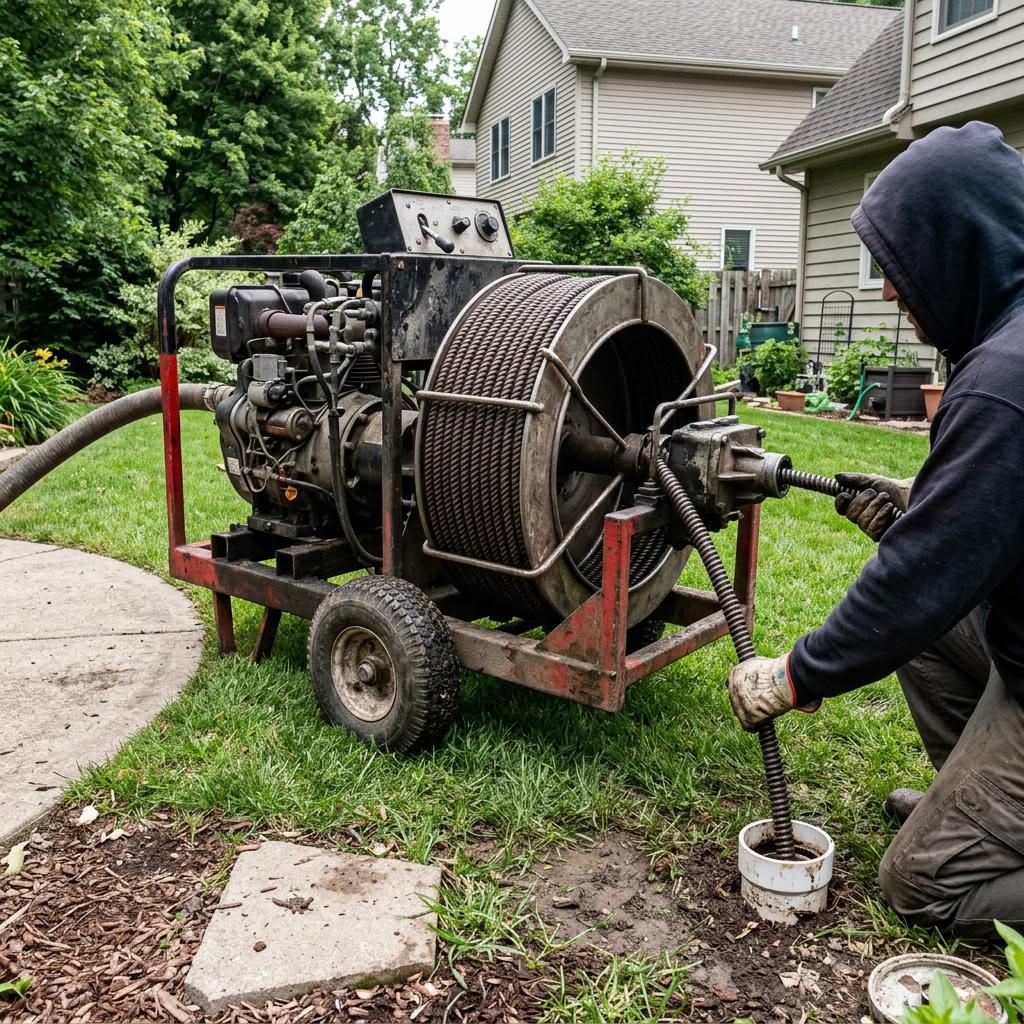
We use heavy-duty cutting heads and hydro jetting to clear roots and scale, restoring flow to the city connection.
Our Professional Process
Access via Cleanout
We locate your main line cleanout for safe, direct access to the sewer lateral.
Root Cutting & Clearing
We deploy specialized cutting equipment to sever roots and break apart massive blockages.
Flow Testing
We run high volumes of water to ensure the line is carrying waste efficiently to the municipal sewer.
The Line Every Other Drain Depends On
The main sewer line, sometimes called the lateral, is the single pipe that carries all of your home's waste from the foundation out to the municipal sewer. Because every fixture ultimately feeds into it, a blockage here does not affect one sink or toilet; it affects the entire house, often surfacing first in the lowest drains such as a basement floor drain or a ground-floor toilet.
That whole-house symptom is the telltale sign of a main-line issue. When flushing an upstairs toilet causes a basement drain to gurgle or back up, the problem is almost certainly in the shared main rather than any single branch, and it calls for equipment and access points beyond what a household plunger can reach. The reason the lowest fixtures suffer first is simple: when the main backs up, water follows gravity to the lowest opening in the house, which is usually a basement floor drain or a ground-floor toilet.
Tree Roots: The Leading Culprit in Ottawa
In a city with as many mature trees as Ottawa, root intrusion is the most common reason main lines fail. Roots are drawn to the moisture and nutrients inside sewer pipes, and they exploit the smallest opening. Older clay and cast-iron laterals, with their jointed sections and corroded walls, offer countless entry points that a maple or other established tree will find over years of slow growth. Even a hairline gap at a joint, invisible from the surface, is enough for a fine root to enter and then thicken season after season until it becomes a dense mass.
Once inside, roots form a fibrous mesh that catches everything flowing past, from toilet paper to grease, until the line chokes. Cutting the roots restores flow, but because the tree keeps growing, root intrusion tends to recur on a cycle that a camera inspection can help you anticipate and manage. Homeowners are sometimes surprised to learn that the offending tree may sit several metres from the pipe or even on a neighbouring lot, since roots range far in search of the moisture a sewer line reliably provides.
Signs Your Main Line Needs Attention
The main line usually gives warning before it fails completely. Catching these signs early is the difference between a routine clearing and a basement full of sewage.
- Multiple fixtures backing up or draining slowly at the same time
- Gurgling from toilets or drains when another fixture is used
- Sewage odours around floor drains or in the yard over the line
- Water backing up into the basement during heavy rain or spring snowmelt
- Patches of unusually lush grass following the path of the buried lateral
How the Line Is Cleared
Clearing a main line starts at a cleanout, an access point that lets a technician send equipment directly into the lateral without disturbing the house. When a cleanout is hard to find or absent, as it can be in some older properties, access may require removing a fixture, so knowing where yours is located ahead of time speeds up any future service.
From there, a heavy-duty cable with a cutting head can shear through roots and break apart compacted blockages, while hydro jetting scours away the grease and scale that let debris accumulate. Which tool leads depends on the cause. Roots generally call for mechanical cutting first, sometimes followed by jetting to flush the debris and clean the walls. On a fragile older pipe, the approach is chosen carefully to clear the obstruction without stressing already-thinned cast iron.
The goal is always the same: restore full flow to the municipal connection so that every fixture in the home drains properly again. A thorough job finishes by running a high volume of water down the line to confirm it is carrying waste efficiently rather than merely trickling through a newly opened gap.
Beyond Clearing: Understanding the Cause
Clearing a main line solves the immediate crisis, but on an older pipe it is worth understanding why the blockage formed. If roots or a structural defect are involved, a camera inspection reveals whether repeated cleanings are a reasonable maintenance plan or whether repair is on the horizon. Freeze-thaw cycles and shifting soil can slowly offset joints, and knowing this lets you plan rather than react.
Cost for main-line cleaning depends on the severity of the blockage, whether root cutting or jetting is required, and how accessible the cleanout is. For a whole-house backup or a main line that keeps clogging, Ottawa Drain Cleaning has the heavy equipment to clear it and the cameras to explain it at (613) 706-2303.
Managing a Line You Cannot Replace Overnight
Many homeowners discover a compromised main line at an inconvenient time, and full repair or replacement is not always something that can happen immediately. The good news is that a known root or scale problem can often be managed on a schedule while you plan for a permanent fix, provided the pipe is still structurally intact enough to carry waste.
The key is to stay ahead of the cycle rather than wait for the next backup. If a camera shows roots regrowing at a predictable rate, a periodic cutting and clearing before they choke the line keeps the household running and prevents the mess and expense of an emergency. Pairing this with mindful water use during spring snowmelt, when groundwater is high and older laterals are most stressed, reduces the odds of a surcharge backup.
This managed approach is not a substitute for eventually addressing a failing pipe, but it buys time to budget and plan on your terms. Understanding exactly what is happening underground, through inspection, is what makes the difference between reacting to crises and steering around them.
Frequently Asked Questions
Ready to schedule main sewer line cleaning?
Call now for immediate service or book online for a scheduled appointment.