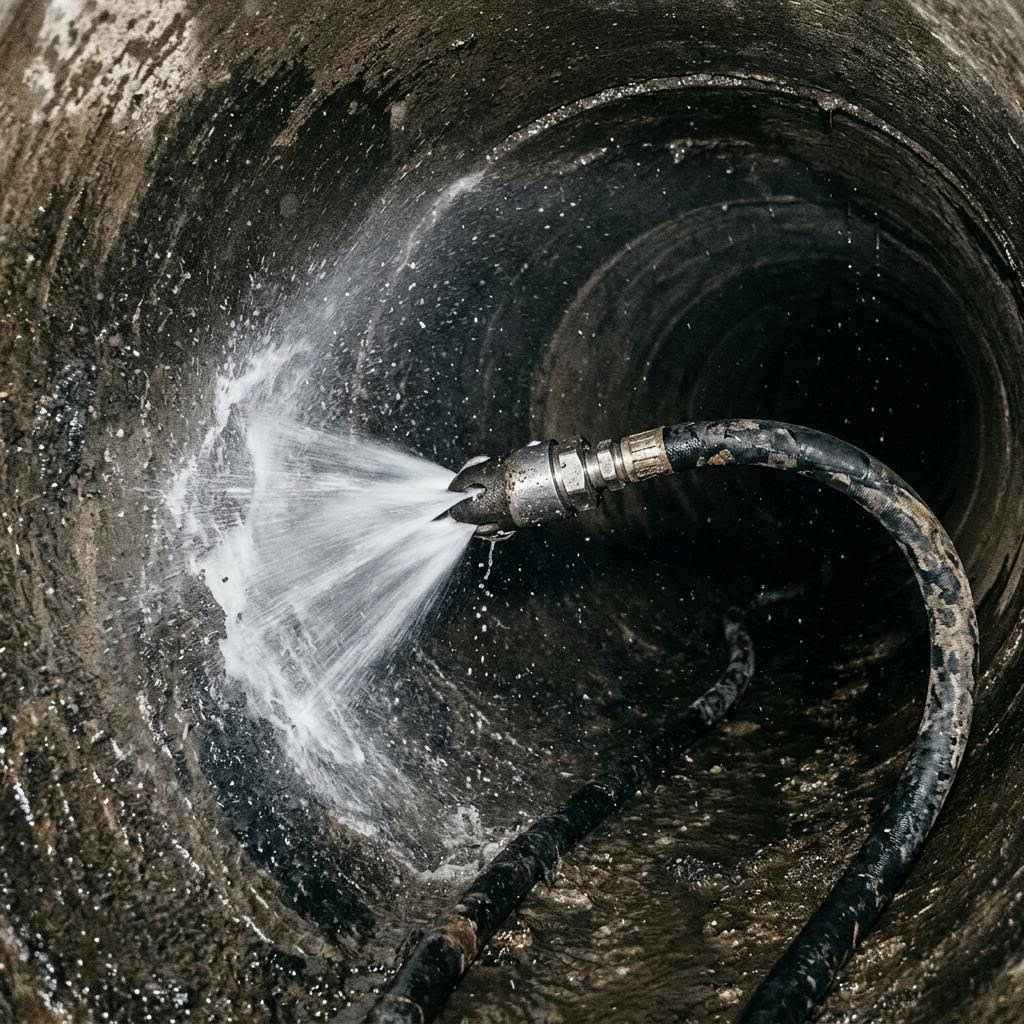
The Problem vs. The Solution
The Problem
Traditional snaking only punches a hole through grease or sludge blockages, meaning the clog will inevitably return as the soft material closes back in.
Our Solution
Hydro jetting scours the pipe walls clean, removing years of grease, scale, and mineral buildup, effectively resetting your pipes to a like-new condition.
Our Professional Process
Camera Inspection
We always inspect the line first to ensure the pipe structure is sound enough for high-pressure jetting.
Scouring
We insert a specialized nozzle that blasts water at up to 4,000 PSI, cutting through roots, grease, and debris.
Final Polish
A final camera run verifies that the pipe walls are completely clean.
What Sets Hydro Jetting Apart
Hydro jetting is often described as pressure-washing the inside of your pipes, and the comparison is apt. A specialized hose feeds a nozzle deep into the line, and forward and reverse water jets both propel the hose and blast the pipe walls clean. The rear-facing jets pull the hose forward and flush loosened debris back toward the access point, so the line is not only opened but flushed of the material that was clinging to it.
This distinction is the whole point. Mechanical cabling clears an opening, but the grease, sludge, or scale coating the walls remains and quickly closes back in. Jetting removes the material itself, returning the pipe close to its original internal diameter, which is why it is the preferred approach for lines that clog again and again despite regular snaking.
The method is also versatile in a way that cabling is not. By changing the nozzle and adjusting the pressure, the same equipment can gently rinse a delicate line or aggressively cut through compacted roots, and it can navigate bends that would defeat a rigid tool. That adaptability is a large part of why it has become a standard for both stubborn emergencies and routine deep cleaning.
Problems It Solves Especially Well
The technology shines against buildup that clings to pipe walls rather than sitting as a single obstruction. Where a cable would poke a hole and move on, jetting removes the coating that a cable leaves behind, which makes it the tool of choice for anything sticky, greasy, or mineralized. In Ottawa, several of these problems are common enough to make jetting a frequent recommendation.
- Congealed kitchen grease that repeatedly narrows the line
- Mineral scale from the region's hard water on older pipe walls
- Fine tree roots that have worked through joints in clay or cast-iron laterals
- Sand, silt, and sediment washed into lines during spring runoff
- Soap and detergent buildup in laundry and bathroom branches
Why Inspection Comes First
Responsible jetting never begins blind. High-pressure water is powerful, and directing it into a pipe that is already cracked, badly corroded, or partially collapsed can turn a cleaning job into a repair. This is a real consideration in Ottawa's pre-1970s neighbourhoods, where cast-iron and clay drainage has often thinned with age.
A camera pass before jetting confirms the pipe is structurally sound and reveals exactly what the blockage is made of. That lets the technician select an appropriate pressure and nozzle rather than applying maximum force by default. On sound modern PVC in newer subdivisions, jetting is straightforward; on fragile older material, the decision requires more care and sometimes a gentler approach.
Skipping this step to save time is a false economy. Directing thousands of pounds of pressure into an unseen crack or a section thinned by decades of corrosion can widen the damage in seconds, converting what should have been a routine cleaning into an urgent repair. The brief inspection beforehand is cheap insurance against a far more costly outcome, and it is a hallmark of responsible jetting.
A Preventive Tool, Not Just a Rescue
While many homeowners first encounter jetting during an emergency, its greatest value is often preventive. Restaurants and busy households alike benefit from periodic jetting that keeps grease and scale from ever reaching a critical thickness, avoiding the downtime and mess of a full stoppage.
Because jetting restores the full pipe diameter, the interval between cleanings stretches out compared with snaking alone. A line that had to be snaked every few months to stay ahead of grease may go a year or more between jetting visits, and each visit leaves it in genuinely clean condition rather than merely open.
Cost depends on the length and diameter of the line, how much buildup is present, and the ease of access, but the long-term math often favours occasional thorough jetting over frequent partial clearings. For commercial kitchens in particular, a jetting schedule tied to the sewer-use expectations that Ottawa places on food-service operations tends to pay for itself in avoided emergencies and protected compliance.
Deciding If Jetting Is Right for You
Jetting is not always the answer. A single hair clog in a bathroom sink does not warrant it, and a severely deteriorated pipe may need lining or replacement instead. The best candidates are lines with heavy wall buildup, recurring grease clogs, or root intrusion in a structurally sound pipe.
If your drains keep clogging no matter how often they are cleared, that pattern is a strong hint that buildup on the walls is the culprit and that jetting could break the cycle. A technician from Ottawa Drain Cleaning can inspect the line, confirm it is a good candidate, and carry out the work at (613) 706-2303.
Jetting and the Ottawa Climate
The region's conditions make a strong case for periodic jetting on the right lines. Hard water lays down mineral scale that narrows pipes and gives grease a rough surface to cling to, and once scale has built up, only a scouring method reliably removes it. A drain that seems to clog faster each year is often losing diameter to a combination of scale and grease that cabling cannot touch.
Seasonal patterns add to the argument. Spring runoff can carry sand and silt into laterals, and the long cold season keeps grease solid in buried and exterior-wall pipe sections for months at a time. Jetting after the spring thaw flushes out the sediment that settled over winter, while a pre-winter cleaning clears grease before the cold locks it in place.
None of this means every home needs routine jetting. The value is greatest for kitchens, older homes with scaled pipe, and any line with a history of recurring buildup. Matching the frequency to the actual condition of your pipes, rather than a fixed schedule, keeps the service worthwhile rather than excessive.
Frequently Asked Questions
Ready to schedule hydro jetting?
Call now for immediate service or book online for a scheduled appointment.