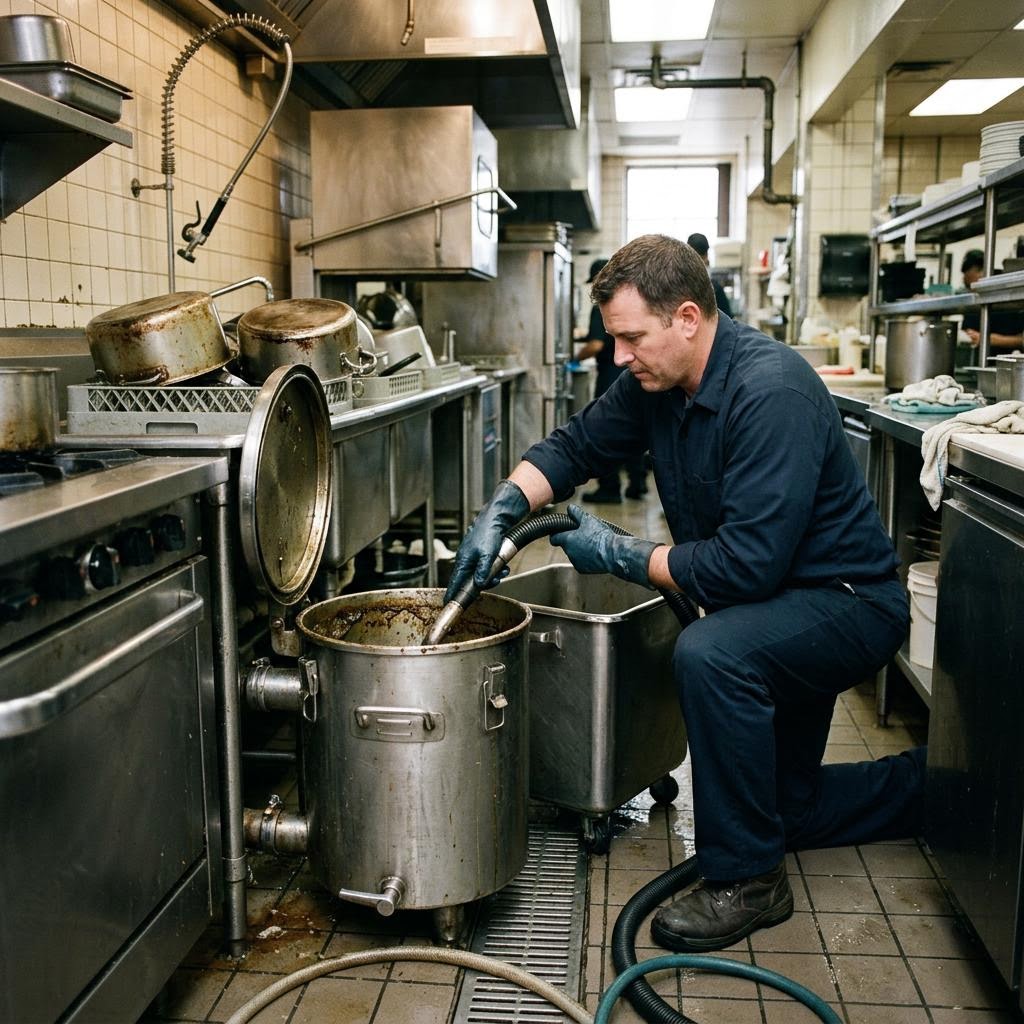
The Problem vs. The Solution
The Problem
Issues related to grease trap cleaning can cause major disruptions if left untreated.
Our Solution
Our expert technicians rapidly diagnose and fix the issue, restoring proper function immediately.
Our Professional Process
Assessment
Thorough evaluation of the problem area.
Execution
Applying targeted solutions with professional equipment.
Verification
Testing to ensure the issue is completely resolved.
Why Every Commercial Kitchen Needs A Grease Trap
A grease trap, or grease interceptor, is a chamber installed between your kitchen's drains and the sanitary sewer. Its job is to slow the wastewater down long enough for fats, oils, and grease to cool, float to the top, and be captured there, while heavier food solids settle to the bottom, so that only relatively clean water continues on to the sewer. It is a simple device that quietly does critical work every hour your kitchen is open.
For any restaurant, cafeteria, bakery, or food-service operation in Ottawa, this device is not optional. Municipal sewer-use bylaws require food-service establishments to control the grease they discharge, because fats poured into the public sewer congeal, harden, and cause blockages that affect entire neighbourhoods and are expensive to clear. A properly maintained grease trap keeps you compliant, keeps your kitchen running, and keeps you out of a problem shared by everyone on the line.
What Happens When A Trap Is Neglected
A grease trap has a finite capacity, and once the grease cap and settled solids fill it past the point where water can pass through cleanly, everything downstream of it begins to suffer. The most common consequence is a slow or fully backing-up kitchen drain, and it tends to happen at the worst possible moment, in the middle of a busy service when you can least afford to stop.
Beyond the immediate backup, an overloaded trap lets grease escape into your lateral and the municipal sewer, which is exactly what the bylaws are written to prevent. That can mean fines and it puts your health inspection at risk, since inspectors take grease management seriously. There is also the smell to consider: a neglected trap produces a sour, unmistakable odour that drifts into the kitchen and out into the dining area, and it is impossible to hide from staff or customers once it takes hold.
How Often A Grease Trap Should Be Cleaned
The right interval depends on the size of your trap and the volume of grease your kitchen produces day to day. A widely used guideline is to clean the trap once it reaches roughly a quarter full of combined grease and solids, and most well-run operations settle into a regular schedule that keeps them comfortably ahead of that threshold rather than reacting once problems appear.
A high-volume kitchen doing a lot of fried food may need service monthly or even more often, while a smaller operation with an appropriately sized trap may safely go longer between cleanings. Keeping clear records of each service is worthwhile on two fronts: it lets you tune your own schedule based on how fast the trap actually fills, and it gives you a documented maintenance history that inspectors may ask to see.
What Proper Grease Trap Service Includes
Thorough grease trap cleaning is far more than skimming the floating layer off the top. Done correctly, the service empties the trap completely and restores it to full working condition so it can protect your drains until the next scheduled visit. A proper cleaning covers each of the following steps.
- Pumping out the entire contents, including the floating grease cap and the settled solids at the bottom
- Scraping the walls, baffles, and lid to remove hardened, adhered grease that pumping alone leaves behind
- Inspecting the baffles and fittings for damage or wear that would let grease slip through
- Confirming the inlet and outlet are clear and flowing properly before closing up
- Disposing of the collected waste through a licensed hauler in line with regulations
Habits That Extend Time Between Cleanings
Good kitchen practices slow how fast a trap fills and reduce the strain on your whole drainage system, which stretches the interval between paid services. Train staff to scrape plates and pans into the garbage or compost before washing, never to pour cooking oil down any drain, and to use sink strainers that keep food solids out of the line where they would otherwise settle and rot.
Recycling used fryer oil through a proper collection service, so that none of it ever reaches the drain, makes a real and measurable difference to how quickly your trap loads up. These habits do not replace scheduled cleaning, but they meaningfully extend the interval, keep your kitchen drains flowing smoothly between services, and reduce the odds of a surprise backup during a rush.
Keep Your Kitchen Compliant And Running
A grease trap on a reliable maintenance schedule protects you from backups, odours, failed inspections, and bylaw penalties, and it protects the municipal sewer your business is connected to. The cost of service depends on the size of your trap, how frequently it is cleaned, how accessible it is, and disposal requirements, and it is always far lower than the cost of an emergency shutdown in the middle of service.
To set up grease trap cleaning or a maintenance schedule tailored to your kitchen's volume, call Ottawa Drain Cleaning at (613) 706-2303.
The Truth About Additives And Enzymes
Many kitchens are sold on the idea that pouring an enzyme or bacterial additive down the drain will keep a grease trap clean and eliminate the need for pumping. It is worth being clear about what these products can and cannot do. Additives may help break down some organic matter and reduce odours between services, and in that limited role they can be a useful supplement to good practice.
What they do not do is remove grease from your trap. The fats separated out by the trap still have to be physically pumped and hauled away, and relying on an additive in place of proper cleaning tends to backfire in two ways. First, some additives simply emulsify the grease so it passes through the trap and congeals further down the line or in the municipal sewer, which is exactly the discharge the bylaws prohibit. Second, a trap left unpumped on the strength of an additive eventually fills and backs up regardless. Treat additives, if you use them at all, as a minor aid alongside a reliable pumping schedule, never as a replacement for it.
Frequently Asked Questions
Ready to schedule grease trap cleaning?
Call now for immediate service or book online for a scheduled appointment.