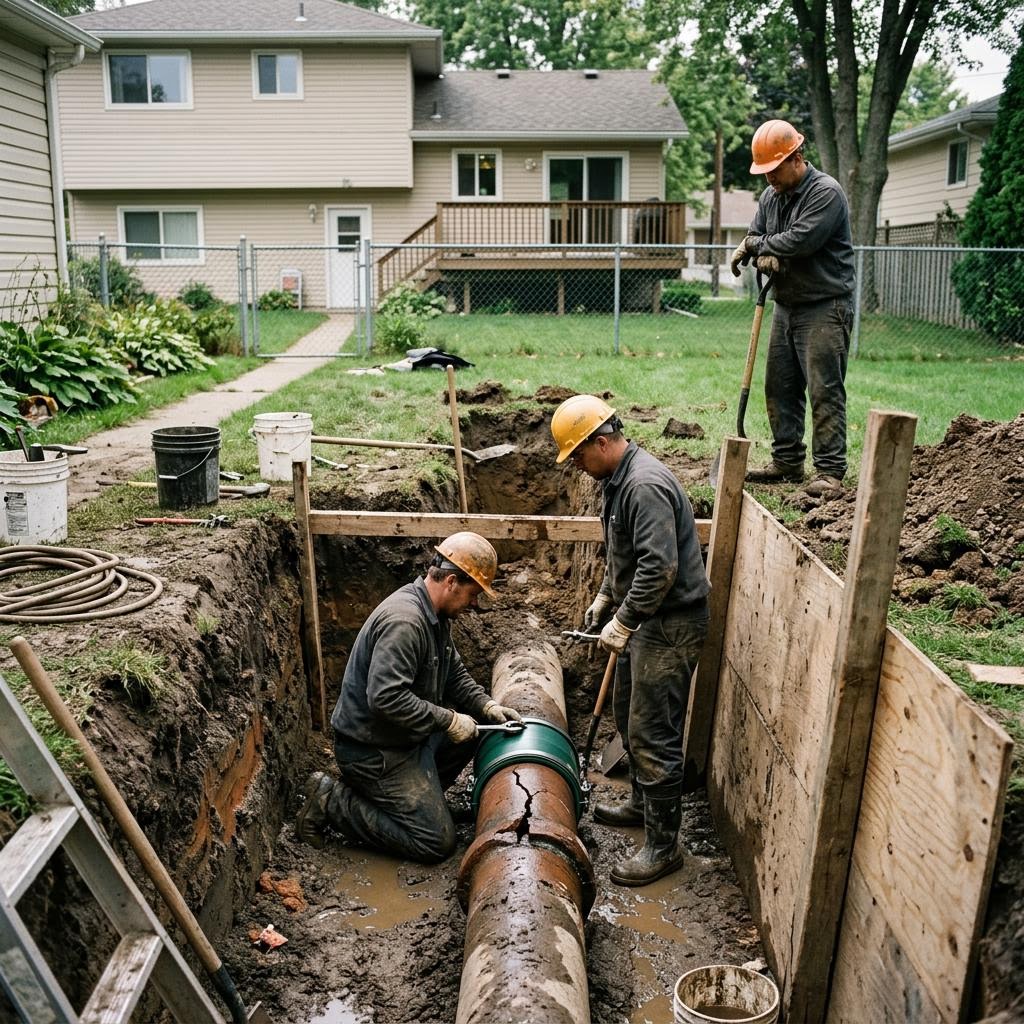
The Problem vs. The Solution
The Problem
Issues related to drain repair can cause major disruptions if left untreated.
Our Solution
Our expert technicians rapidly diagnose and fix the issue, restoring proper function immediately.
Our Professional Process
Assessment
Thorough evaluation of the problem area.
Execution
Applying targeted solutions with professional equipment.
Verification
Testing to ensure the issue is completely resolved.
Recognizing a Repair, Not Just a Clog
Clearing a drain restores flow; repairing a drain fixes the pipe itself. The distinction matters because many Ottawa homeowners keep snaking the same line every few months without realizing the underlying pipe has failed. When a drain repeatedly clogs at the same spot, backs up without an obvious cause, or drains fine one week and stalls the next, the problem is usually structural rather than a simple obstruction.
Repair work addresses cracks, offset joints, collapsed sections, corroded cast iron, and the low spots we call bellies where waste pools and hardens. These are conditions that no amount of cleaning will resolve permanently, and identifying them early is what separates a modest fix from a major excavation.
Why Ottawa Pipes Fail
The causes of drain damage here are shaped by our housing stock and climate. Homes built before the 1970s often have cast-iron and clay drainage that has simply reached the end of its service life. Cast iron corrodes from the inside until the pipe wall grows thin and flakes; clay develops cracks at every joint that become highways for roots.
Ground movement does the rest. Ottawa's clay-heavy soils swell and shrink with moisture, and our deep frost line drives freeze-thaw cycles that shift and stress buried pipe season after season. Add tree roots seeking water at any weeping joint, and you have the three most common repair triggers we see across the region.
- Corrosion and scaling in older cast-iron stacks and laterals
- Cracked or separated joints in clay pipe
- Root intrusion widening small defects into full blockages
- Bellies and offsets caused by soil settlement and frost heave
Diagnosis Comes First
Good repair work begins with knowing exactly what is wrong and precisely where. Digging blind is expensive and often unnecessary. A camera inspection lets us see the interior of the line, grade the severity of any defect, and locate it to within a short distance from the surface using an above-ground signal.
That precision changes everything about the repair. Instead of opening a long trench on a hunch, we can target a single failed section, choose between trenchless and traditional methods with real information, and give you an honest picture of whether the pipe needs a spot repair now or a fuller replacement soon.
The inspection also gives you a baseline. Once a defect is on video, we can revisit the same line later and see whether it is stable or worsening, which turns a guess into a measured decision. For a homeowner weighing whether to repair now or watch a minor issue, that recorded evidence is far more useful than a technician's opinion alone, and it is something you can share with an insurer or a prospective buyer if the question ever comes up.
Repair Methods Explained
The right method depends on the pipe, the defect, and your property. Not every problem needs the yard dug up, and not every pipe is a candidate for a no-dig solution. A straightforward broken section under an accessible area may be simplest to excavate and replace, while a long run under a driveway or mature landscaping is a strong case for a trenchless approach that preserves the surface.
Whatever the approach, the aim is a durable fix that matches the pipe material and the way your household uses the system. We will always explain the trade-offs rather than defaulting to the most invasive option.
It also helps to think about repair in terms of timing and season. Ottawa's ground freezes hard through winter, and excavation in frozen soil is slower and more disruptive than the same work in milder months. When a defect is caught early through maintenance or inspection rather than during a failure, you often have the luxury of scheduling the repair for a time of year that keeps the job simpler and the disruption to your property lower. Emergencies rarely offer that choice, which is another reason early diagnosis is worth so much.
What Affects the Cost of Drain Repair
Several practical factors move the price of a repair. Depth is a big one, since Ottawa lines often sit below the frost line and require more excavation. Location matters too, because a pipe under a finished basement floor, a driveway, or established trees is more involved than one in open ground.
The length of the damaged run, the pipe material, access to cleanouts, and whether the fix is a spot repair or a longer replacement all contribute. Municipal considerations can apply as well, so it is worth confirming responsibilities and any bylaw requirements before work begins. A clear diagnosis up front is the best way to avoid surprises.
One thing worth understanding is the difference between fixing a single defect and addressing an entire aging line. A spot repair on an otherwise sound pipe is a contained project. But if a camera shows that a whole cast-iron or clay lateral is corroded or cracking along its length, patching one section only delays the next failure a few feet away. In those cases a fuller relining or replacement, while a larger commitment, is usually the more economical path over any reasonable time horizon because it puts the repeat failures behind you for decades.
Don't Wait on a Failing Drain
A small crack rarely stays small. Water escaping a damaged line erodes the soil around it, which accelerates settlement and can turn a spot repair into a collapse. Roots that found a hairline gap this year will have widened it by next. The most economical time to repair a drain is almost always the moment you confirm the fault.
Delaying also raises the odds of collateral damage. A drain leaking beneath a slab or foundation can undermine the concrete above it and encourage settlement cracks, while persistent moisture invites mould in enclosed spaces. What starts as a plumbing issue can quietly become a structural and air-quality one if it is ignored long enough. Addressing a confirmed defect promptly keeps the problem contained to the pipe rather than letting it spread into the building around it.
If you are seeing repeat backups, gurgling, or slow drains that resist cleaning, get the line inspected before it worsens. To arrange a camera diagnosis and a straight assessment of your options, reach Ottawa Drain Cleaning at (613) 706-2303.
Frequently Asked Questions
Ready to schedule drain repair?
Call now for immediate service or book online for a scheduled appointment.