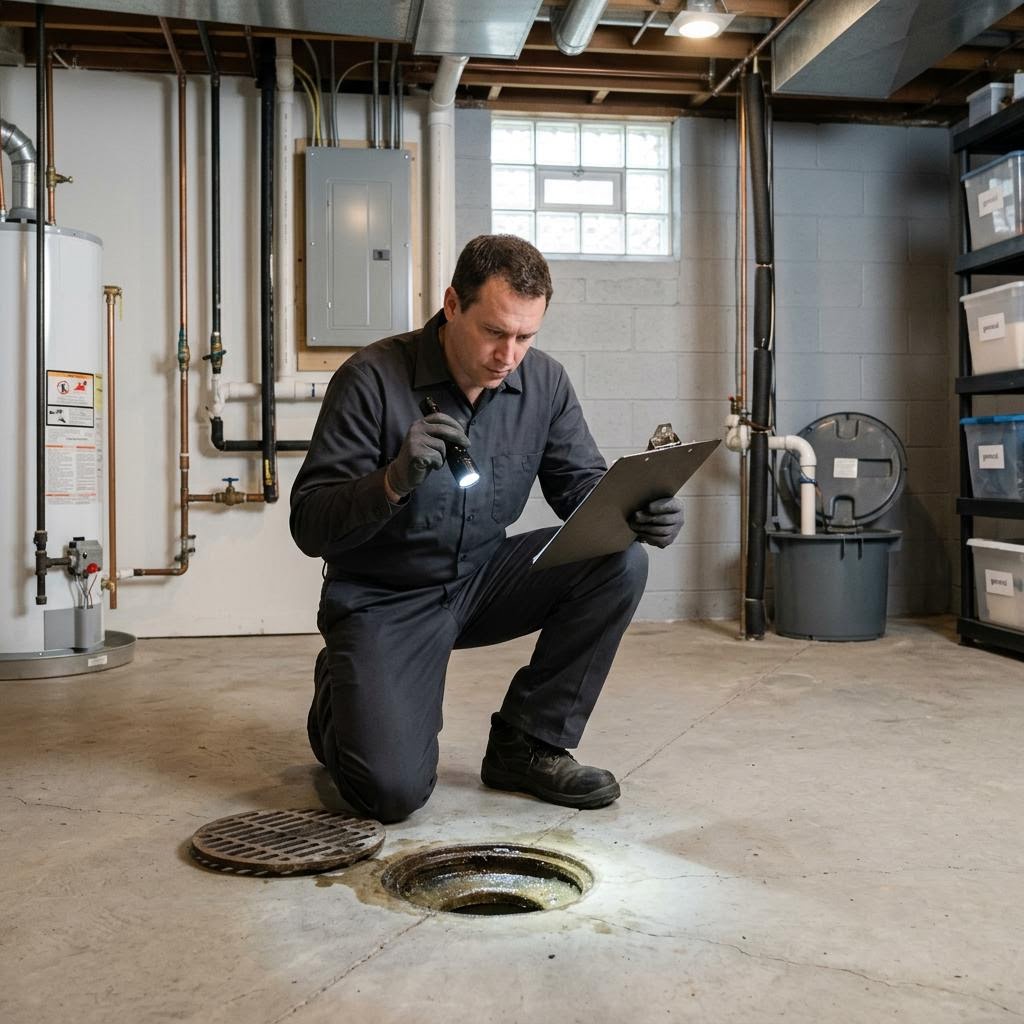
The Problem vs. The Solution
The Problem
Issues related to basement drain backups can cause major disruptions if left untreated.
Our Solution
Our expert technicians rapidly diagnose and fix the issue, restoring proper function immediately.
Our Professional Process
Assessment
Thorough evaluation of the problem area.
Execution
Applying targeted solutions with professional equipment.
Verification
Testing to ensure the issue is completely resolved.
Why the Basement Floor Drain Backs Up First
When something goes wrong with your home's drainage, the basement floor drain is usually the first place it shows. Water follows gravity and takes the path of least resistance, and the floor drain sits at the lowest point of the system. If a blockage or surge prevents waste from leaving the house, that drain becomes the overflow point, which is why a backup here is often the first symptom of a larger problem.
For Ottawa homeowners with finished basements, home offices, or storage below grade, this makes the floor drain worth understanding. It is both an early-warning device and, unfortunately, the spot where a backup does the most immediate damage to living space.
Backup Versus Blocked Floor Drain
There are two distinct problems that look similar, and telling them apart guides the response. Sometimes the floor drain itself is blocked; debris, sediment, or a dried-out trap causes local slow drainage or minor pooling around the drain. Other times the floor drain is fine and is simply the exit point for a backup originating deeper in the main line.
The difference is significant. A blocked floor drain is a contained, local job. A main-line backup surfacing through the floor drain is a whole-house issue that will keep returning until the underlying blockage or surge is addressed. When sewage rather than clean water appears, or when several fixtures act up together, you are almost certainly dealing with the deeper problem.
A simple test can help you tell them apart. If the floor drain backs up only when you run a lot of water elsewhere in the house, such as a bathtub draining or the washing machine emptying, the trouble is downstream in the main and the floor drain is merely the relief point. If the floor drain is slow or wet on its own, with nothing else running, the drain and its own branch are the likelier culprits. Watching that relationship before you call gives a technician a valuable head start.
The Ottawa-Specific Culprits
Basement drain backups in this region trace to a recognizable set of causes tied to our housing and weather.
- Root intrusion in older clay and cast-iron laterals under mature trees
- Grease and scale accumulation narrowing the main line over years
- Spring freshet and heavy snowmelt surging the municipal system
- Combined sewers downtown overwhelmed during intense storms
- A dried-out floor-drain trap letting odour and debris cause problems
The Trap That Dries Out
A frequently misunderstood issue is the floor-drain trap. Like every drain, a basement floor drain has a curved trap that holds water to block sewer gas from entering the room. Because these drains are used so rarely, the water in the trap can evaporate, especially in Ottawa's dry heated winters. The result is sewer odour drifting up from an apparently clean drain.
The fix is simple: pour a bucket of water into the floor drain every month or two to refill the trap, and add a little in seldom-used drains before winter. It costs nothing and prevents a smell that homeowners often mistake for a serious backup. Knowing this saves an unnecessary service call and helps you distinguish a dry trap from a real drainage problem.
A related detail is the trap primer found on some floor drains, a small device meant to top up the trap automatically. When one fails, the trap dries out despite the homeowner assuming it is being maintained, and the mystery odour returns. If you regularly refill the trap and still get sewer smell, either the primer has failed or the odour is coming from further down the line, and that is the point at which it is worth having someone take a proper look.
Protecting a Finished Basement
If your basement is finished or holds anything of value, prevention is worth prioritizing. A backwater valve is the most effective safeguard against sewage entering through the floor drain during a municipal surge, letting waste out while blocking any reverse flow. It is especially worthwhile for homes on older combined sewers or in areas prone to seasonal water pressure on the system.
Pair that with routine main-line maintenance and periodic inspection, particularly if your property has mature trees and older pipe. Keeping the lateral clear of roots and scale removes the private-side causes, while a backwater valve addresses the municipal-side risk. Together they cover the two ways backups reach a basement.
How you finish and use the space matters too. Storing valuables in sealed, raised bins rather than cardboard on the floor, keeping important items off the slab, and choosing water-resistant materials for a basement renovation all reduce what a backup can ruin. None of this replaces fixing the underlying cause, but it limits the damage in the window between a backup starting and the line being cleared, which for a finished basement can be the difference between a nuisance and a costly loss.
When to Call and What Happens Next
Call for professional help when clean water pools that you cannot explain, when sewage appears at the floor drain, when multiple basement drains act up together, or when a backup returns after being cleared. These all point beyond the floor drain to the main line, and they need proper equipment and a camera to diagnose correctly.
A camera inspection after a basement backup usually reveals exactly what is happening in the lateral, which lets us clear the cause and recommend the right prevention for your home. It also gives you a clear record of the pipe's condition, which is useful whether you are deciding on a backwater valve, weighing a repair, or simply wanting reassurance that the line is sound before finishing the space below grade.
The recurring theme is that the basement floor drain is a messenger. It rarely causes the problem it reveals, but it is where drainage trouble shows itself first and does the most immediate harm. Reading its signals early, keeping its trap filled, and addressing the underlying line before a surge or blockage forces the issue is how you keep a basement dry through Ottawa's demanding seasons. To get a backup handled and your basement protected, call Ottawa Drain Cleaning at (613) 706-2303.
Frequently Asked Questions
Ready to schedule basement drain backups?
Call now for immediate service or book online for a scheduled appointment.