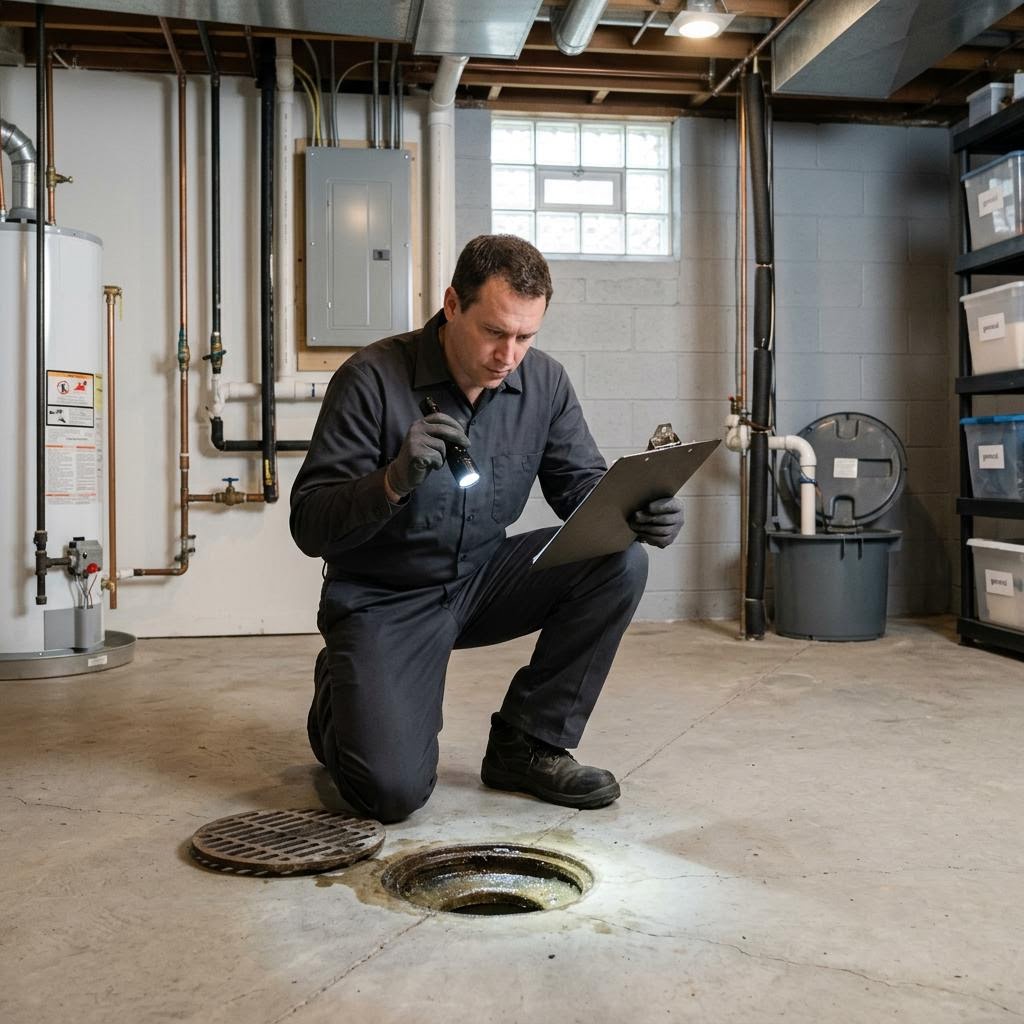
The Problem vs. The Solution
The Problem
Issues related to floor drain cleaning can cause major disruptions if left untreated.
Our Solution
Our expert technicians rapidly diagnose and fix the issue, restoring proper function immediately.
Our Professional Process
Assessment
Thorough evaluation of the problem area.
Execution
Applying targeted solutions with professional equipment.
Verification
Testing to ensure the issue is completely resolved.
The Drain Most Homeowners Forget About
The floor drain in your basement, laundry room, garage, or mechanical room is one of the most important fixtures in your home, and also the one people think about least. Its job is to catch water from the washing machine, water heater, snowmelt tracked in over winter, and any overflow or leak, then carry it safely away before it can pool on the floor and reach anything valuable stored nearby.
Because it sits unused for long stretches, a floor drain can quietly develop two problems at once: a blockage building up out of sight, and a trap that has dried out. Both matter, and both are easy to overlook until the day you actually need the drain to work, which is usually the day water is already spreading across the floor. A little attention on a calm day prevents a scramble on a bad one.
Why Ottawa Basements Are Especially Vulnerable
Ottawa's climate puts unusual demands on floor drains. During the spring freshet and rapid snowmelt, groundwater levels rise and basements take on more moisture than at any other time of year. A floor drain clogged with sediment, lint, or debris at that moment can turn a minor thaw into standing water on your basement floor, and by then the drain you never think about becomes the only thing between a dry basement and a wet one.
Many older neighbourhoods near the core still rely on aging clay or cast-iron laterals and, in some downtown areas, combined sewers that carry both sewage and stormwater in a single pipe. During heavy rain or snowmelt, these systems can surcharge, and a floor drain becomes the lowest point where a backup first appears. Keeping that drain clear and properly trapped is your first line of defence against that scenario.
Freeze-thaw cycles also shift the soil around buried pipes over the years, and fine sediment gradually settles into the low point of a floor drain line where the flow slows. Because of this steady accumulation, periodic cleaning matters more here than in milder climates that do not swing between deep freeze and thaw so many times each season.
The Dried-Out Trap Problem
Every floor drain has a P-trap beneath it, a curved section that holds a small pool of water to seal out sewer gas from the pipe below. When a drain goes months without use, that water simply evaporates, and once the seal is gone there is nothing to stop sewer odours from drifting up into your home. It is one of the most common causes of a mysterious basement smell.
If you notice a sewer smell in the basement, the fix is often as simple as pouring a pitcher of water down the floor drain to refill the trap. Adding a small amount of mineral oil on top slows future evaporation because it floats and does not evaporate the way water does. If the smell persists after refilling the trap, the odour is coming from somewhere else in the line, such as a blockage that is trapping gas, and it deserves a professional look.
Signs Your Floor Drain Needs Cleaning
A floor drain gives subtle warnings before it fails outright, and because it is out of sight you have to watch for them deliberately. Any of the following is worth acting on before the next heavy rain or thaw arrives.
- Water backing up around the drain when the washing machine discharges its wash water
- A drain that empties slowly or holds standing water after a spill or mop-up
- Persistent musty or sewage odours in the basement or laundry area
- Visible sediment, silt, or debris settled in and around the drain grate
- Dampness or water staining on the floor near the drain after heavy rain
How Professional Floor Drain Cleaning Works
Floor drains often connect to larger lines and can accumulate a mix of laundry lint, sediment, soap residue, and sometimes grease, so they respond well to thorough mechanical cleaning rather than a quick surface clearing. We remove the grate, clear the trap and line with appropriately sized cabling, and where the buildup is heavy, flush the pipe with pressurized water to scour the walls back to full diameter and carry the loosened sediment away.
Where a floor drain keeps backing up despite cleaning, a camera inspection can confirm whether the problem is simple debris or something structural such as root intrusion, a cracked joint, or a collapsed section. That way you are not paying to repeatedly clear a line that has a deeper fault, and any repair can be targeted precisely rather than guessed at.
Prevention And When To Get Help
Simple maintenance keeps a floor drain ready for the moment you actually need it. Pour water down it every couple of months to keep the trap sealed against sewer gas, keep the grate clear of stored items and debris, and have the line cleaned professionally before spring melt if your basement has any history of moisture or backups. These small steps cost almost nothing and prevent the far larger expense of water damage.
If your floor drain is backing up, holding water, or letting sewer gas into your home after you have refilled the trap, call in a professional before the next heavy thaw rather than waiting to see if it clears on its own. To schedule a floor drain cleaning or inspection in Ottawa, call Ottawa Drain Cleaning at (613) 706-2303.
Backwater Valves And Older Systems
In parts of Ottawa served by older or combined sewers, a floor drain is the point most likely to overflow when the municipal system surcharges during heavy rain or a fast melt. If your basement has ever taken on water through the floor drain during a storm, the cause is often pressure from the sewer side rather than a blockage in your own line, and no amount of cleaning alone will prevent a repeat of that scenario.
A backwater valve installed in the line allows waste to flow out while automatically closing to block sewer water from pushing back in. Keeping that valve, and the floor drain feeding it, clean and free of debris is essential, because a valve fouled by sediment cannot seal properly at the exact moment it is needed. When we clean a floor drain in an older home, we can advise whether the system's history points to a straightforward buildup or to a backflow issue that deserves a broader look at how the home is protected.
Frequently Asked Questions
Ready to schedule floor drain cleaning?
Call now for immediate service or book online for a scheduled appointment.